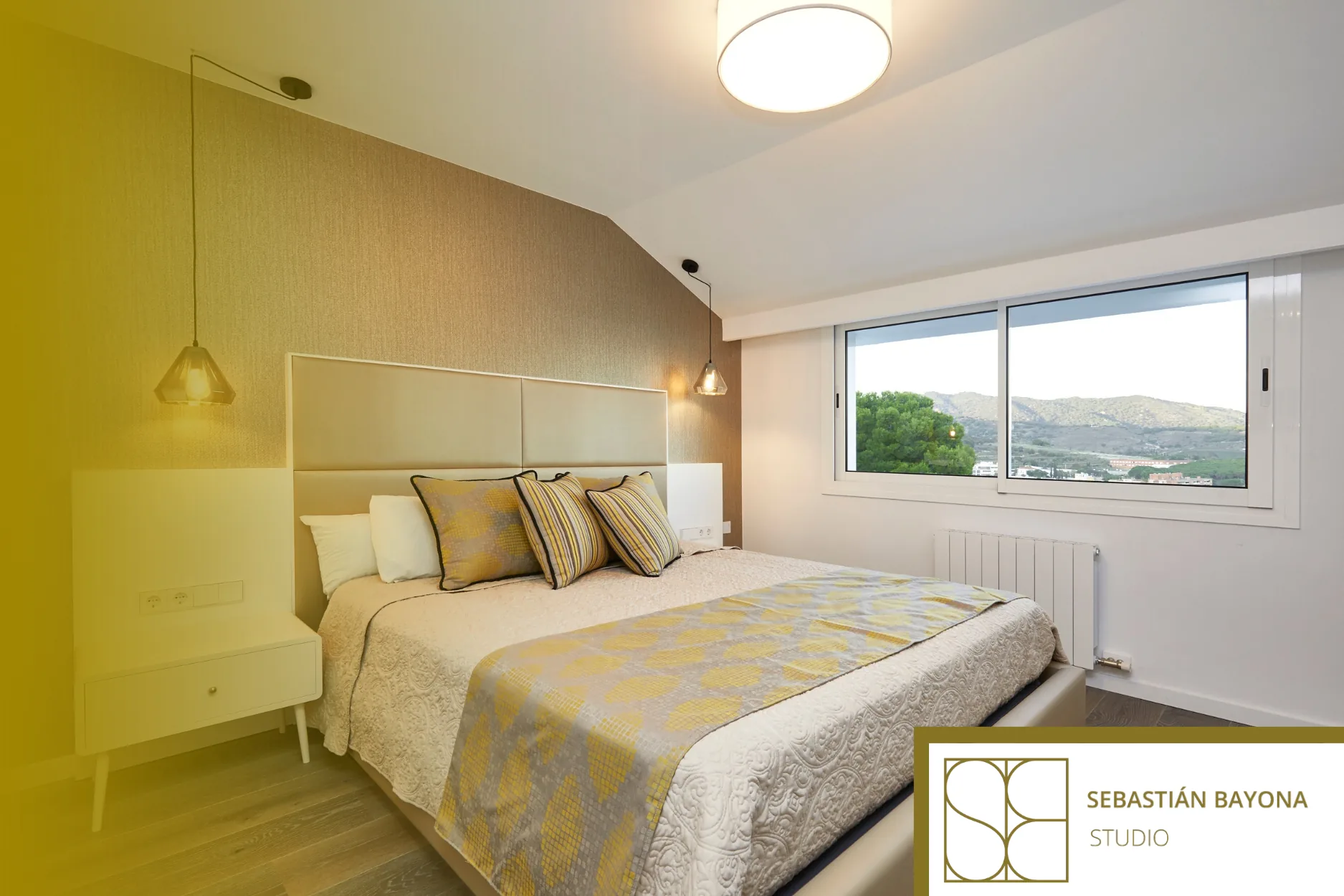
Good bedroom lighting combines three independent functions: gentle ambient light for relaxation and movement, focused lighting for reading, and clear, even illumination for getting dressed. Each should be controlled separately. Rather than adding more fittings, the aim is to position light precisely, adjust its intensity and prevent one activity from disturbing another.
Why bedroom lighting needs to change throughout the day
A bedroom serves different purposes depending on the time of day. In the morning, we need enough light to choose clothes, find belongings and prepare to leave. In the evening, the same room should support a quieter pace.
A single ceiling fixture rarely meets all these requirements particularly well. It may be bright enough for general circulation yet leave shadows inside wardrobes, or feel unnecessarily intense when someone wants to relax.
The starting point is therefore not the selection of decorative lamps. It is an understanding of how the bedroom is used, where the furniture will stand and which activities can take place simultaneously.
These decisions follow the broader principles explored in our guide to layered lighting throughout the home, applied here to the particular needs of a sleeping space.
Lighting for rest: a softer atmosphere without losing visibility
Evening lighting should provide enough visibility to move around comfortably while avoiding unnecessary brightness. Warm light, often around 2700 K, is a common choice for creating a gentle atmosphere in residential bedrooms.
Colour temperature, however, is only one part of the experience. Even a warm light source can feel uncomfortable when it shines directly into someone's eyes or remains visible from the bed.
Indirect lighting offers a useful alternative. Wall-mounted fixtures that wash light across a surface, concealed architectural lighting and lamps with diffusing shades can provide illumination without making the light source itself the centre of attention.
Dimming adds another level of flexibility. Where the fixtures and drivers are compatible, adjustable brightness allows the room to move from everyday activity towards a more subdued evening setting.
Soft lighting is not a substitute for healthy sleep habits. Its role in interior design is to ensure that the bedroom remains comfortable when strong illumination is no longer needed.
Reading in bed: focused light in the right position
Reading requires enough light to illuminate the pages without producing glare or lighting the entire bedroom unnecessarily.
The most appropriate position for a reading lamp depends on how someone actually sits in bed. Headboard height, pillow arrangement, bedside furniture and the distance between the reader and the light source all affect the result.
Installing wall lights at a standard height without considering these details can create unwanted shadows or direct the beam towards the reader's face.
Adjustable wall-mounted reading lights offer precise control, particularly when the beam can be directed towards the book. A bedside table lamp can be equally effective if its shade controls glare and its position suits the reading posture.
In a shared bedroom, independent switches on both sides of the bed are particularly valuable. One person should be able to read while the other rests, without having to illuminate the whole room.
The intention is not to make the bedroom as bright as a workspace. It is to provide sufficient localised lighting for comfortable reading.
Dressing and wardrobe lighting: clarity matters more than atmosphere
The area around wardrobes and dressing furniture has a different set of priorities. Here, illumination needs to reveal the contents of shelves and drawers while allowing clothing colours and textures to be distinguished accurately.
A ceiling fixture positioned behind someone standing in front of a wardrobe can cast their shadow over the very area they need to see.
Depending on the room layout, lighting placed slightly ahead of the wardrobe frontage can improve visibility. Integrated LED fittings inside cabinets may also be useful, especially in deep or enclosed storage areas.
Colour rendering is another consideration. A colour rendering index, or CRI, of at least 90 is a useful specification when accurate colour perception is important, particularly when comparing similar shades of fabric.
In bedrooms with a dedicated dressing area, the lighting scheme should be developed alongside the storage layout. Our article on movement and privacy in the principal bedroom explains why access routes and overlapping routines need to be considered together.
Choosing the right colour temperature
Colour temperature is measured in kelvin (K). Lower values generally produce a warmer appearance, while higher values tend towards a more neutral or cooler white.
For ambient bedroom lighting, 2700–3000 K provides a useful starting range. Wardrobe lighting may use warm or more neutral light, depending on the overall scheme, provided it offers sufficient brightness and appropriate colour rendering.
Different functions do not necessarily require different colour temperatures. Combining lamps with noticeably inconsistent tones can make a carefully designed room feel fragmented.
Natural daylight, wall colours, fabrics and furniture finishes also influence how artificial light is perceived. A lamp beside dark timber may appear quite different from the same fitting against a pale wall.
The objective is visual coherence rather than choosing a particular kelvin value in isolation.
Switches and lighting scenes: designing around real routines
Even a carefully selected lighting scheme can become inconvenient when the controls are poorly placed.
Entering the bedroom, switching off the lights from bed, finding clothing early in the morning or getting up during the night should not require turning on every fixture.
It is generally useful to have general lighting controls near the entrance and accessible from the bed. Separate switching for bedside reading lights, ambient fittings and wardrobes allows each area to operate independently.
A low-intensity night setting can also make it easier to move through the room without a sudden increase in brightness. The direction of the light is important: it should illuminate the necessary route without shining towards the pillows.
Automation is not essential. A straightforward and intuitive arrangement of switches may be more comfortable than an elaborate control system that complicates daily routines.
Why lighting should be planned alongside the furniture
One of the most common planning mistakes is fixing electrical points before the final dimensions and positions of the bed, headboard and wardrobes have been agreed.
A change in bed width can leave reading lights incorrectly aligned. Similarly, integrated wardrobe lighting requires coordination of electrical supplies, access for maintenance and compatible components before the furniture is installed.
These are not merely technical considerations. They affect the visual balance of the room and the ease with which it can be used every day.
At Sebastián Bayona Studio, a residential interior design studio based in Barcelona, we approach lighting, spatial planning, materials and furniture as interconnected decisions. This helps the bedroom support the habits of the people who live in it rather than imposing a fixed arrangement on their routines.
If you are considering redesigning your bedroom or renovating your home, contact our studio to discuss your project. Planning the lighting early makes it possible to create a room that adapts naturally from morning activity to evening rest.
FREQUENTLY ASKED QUESTIONSWhat type of lighting is best for a bedroom?
A combination of warm, adjustable ambient lighting, dedicated reading lights and clear wardrobe lighting usually offers the greatest flexibility. The position and direction of the fixtures are just as important as the colour temperature.
What colour temperature is best for bedroom relaxation?
Warm light around 2700 K is a common choice for bedrooms. Reducing brightness and avoiding direct glare are equally important. Colour temperature alone does not determine how comfortable a room feels.
Are wall-mounted reading lights better than bedside lamps?
Both can work well. Adjustable wall lights provide a focused beam and keep bedside tables clear. Table lamps are easier to replace or reposition. The right choice depends on the bed, headboard, furniture arrangement and reading position.
How can I avoid shadows inside a wardrobe?
Avoid relying entirely on a ceiling light positioned behind the person using the wardrobe. Consider lighting ahead of the wardrobe frontage or integrated fixtures within the cabinetry. Good colour rendering also makes it easier to distinguish clothing colours.